
The next step after you’ve determined your home equity is to calculate how much you can borrow from it. While you can’t borrow the total amount, most lenders allow you to borrow up to 80% of your home’s value. You’ll need to multiply this by 0.8 and subtract what you owe on the mortgage to see how much you can borrow.
- In this article, we will provide detailed explanations of ROE, including its meaning, formula, and specific examples.
- XYZ Ltd.'s total assets were $12 billion and its total liabilities were $5 billion as of March 31, 2021.
- The fundamental accounting equation is the quickest and easiest way to determine shareholders’ equity.
- In other words, the Shareholder's equity formula finds the net value of a business or the amount that the shareholders can claim if the company's assets are liquidated, and its debts are repaid.
- Suppose the same company’s Paid-up Capital is $3,000,000-, Retained Earnings were $500,000 and the Treasury Stock was $300,000 in the following year.
- Shareholder equity is also known as the book value of the company and is derived from two main sources, the money invested in the business and the retained earnings.
How is return on equity calculated?
A company with a real estate cash flow high ROE and strong reinvestment strategies is more likely to experience sustainable growth. Investors often look at ROE alongside the company’s reinvestment rate to assess future earnings potential. In this article, we’ll explore the importance of Return on Equity, how to calculate and interpret it, and the limitations of ROE as a financial measurement. But debt is also the riskiest source of funding for businesses because the latter must honor the agreement with creditors to pay interest on a regular basis regardless of the state of the economy. We can use this information to guide our own individual investment decisions while keeping in mind various debt and equity products. Although a lot of investment choices are based on the amount of risk we are willing to face, we cannot ignore all the important factors mentioned above.
Common shareholders’ equity
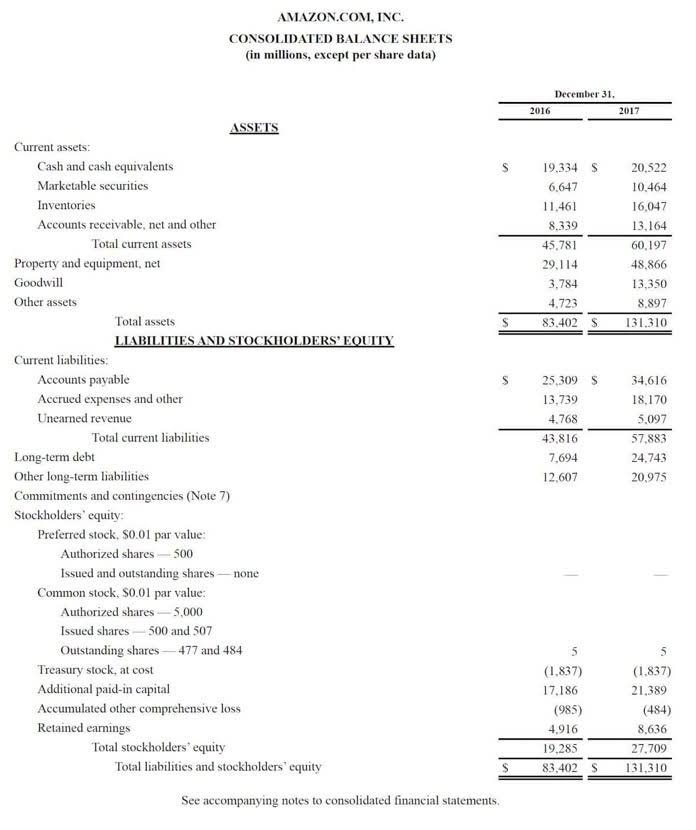
At that time, XYZ Ltd. had $7 billion in total shareholders' equity (or assets minus liabilities). Treasury stock is not an asset, it's a contra-stockholders' equity account, that is to say it is deducted from stockholders' equity. Share capital is the money a company raises by selling its shares to shareholders in exchange for cash. Current assets are those that can be converted to cash within a year, such as accounts receivable and inventory. Long-term assets are those that can't be converted to cash or consumed within a year, such as real estate properties, manufacturing plants, equipment, and intangible items, including patents. If the same assumptions are applied for the next year, the end-of-period shareholders equity balance in 2022 comes out to $700,000.
What Percentage of Your Income Should Go Toward Your Mortgage?
- Part of the ROE ratio is the stockholders' equity, which is the total amount of a company's total assets and liabilities that appear on its balance sheet.
- If this figure is negative, its liabilities exceed its assets; this can deter investors who view such companies as risky.
- If you don’t have enough equity to pay these costs, you’ll have to bring your own funds to pay them.
- However, financial distress is not always indicated by low or negative shareholders equity.
- However, there are other sources and thus, other comprehensive income.
In the final section of our modeling exercise, we’ll determine our company’s shareholders equity balance for fiscal years ending in 2021 and 2022. Now that we’ve gone over the most frequent line items in the shareholders’ equity section on a balance sheet, we’ll create an example forecast model. The retained earnings portion reflects the percentage of net how to calculate stockholders equity earnings that were not paid to shareholders as dividends and should not be confused with cash or other liquid assets. If a company's shareholder equity remains negative, it is considered to be balance sheet insolvency. Current assets include cash and anything that can be converted to cash within a year, such as accounts receivable and inventory. These earnings, reported as part of the income statement, accumulate and grow larger over time.
- In terms of dividend payments, there are four critical dates, and two of them call for particular accounting treatments in terms of journal entries.
- Retained earnings are the portion of a company's profits that isn't distributed to shareholders.
- Earlier, we were provided with the beginning of period balance of $500,000.
- You must add long-term assets to current assets to get the total assets for this equity formula.
- Return on Equity (ROE) is a financial metric that measures your company’s profitability relative to shareholder’s equity.
- We recommend that you seek independent financial advice and ensure you fully understand the risks involved before trading.
Companies that buy back stock on the open market typically use the shares for treasury purposes, which exempt them from counting toward the total number of shares outstanding. Equity for shareholders decreases when fewer shares are outstanding. Unrealized losses, for example, would have to be negative because a company's stock value cannot fall below zero. A corporation would be insolvent if its shareholders' equity turned negative. Total how is sales tax calculated equity (book value) might be equivalent to total shareholder equity on a company's balance sheet if you look at it from the standpoint of book value.

The fundamental accounting equation states that the total assets belonging to a company must always be equal to the sum of its total liabilities and shareholders’ equity. When the balance sheet is not available, the shareholder’s equity can be calculated by summarizing the total amount of all assets and subtracting the total amount of all liabilities. Investors and analysts look to several different ratios to determine the financial company. This shows how well management uses the equity from company investors to earn a profit.